SHARE WITH A FRIEND

Large office space decisions in Malta extend far beyond rental price per square metre or total floor size. Once a company reaches a certain operational scale, the office becomes part of the business infrastructure itself rather than simply a place where employees work. A large office should function as a long-term operational asset that aligns workspace design, infrastructure, and internal workflows with business growth requirements.
What Counts as a Large Office in Malta?
Once a company moves beyond a single-team structure, office planning shifts from simple fit-out considerations to broader operational system design. While every organisation uses space differently, large office planning in Malta generally begins within the following ranges:
- 300–500 sqm: Typically, suitable for approximately 25–50 employees, depending on layout density and operational style. At this stage, businesses usually begin separating key functions and introducing dedicated meeting rooms and collaborative spaces.
- 500–1,000 sqm: More suitable for multi-department operations requiring greater internal structure, higher meeting demand, and clearer separation between teams. These offices often support growing corporate environments.
- 1,000 sqm+: Generally considered headquarters-level office space. These environments are commonly used for large operational teams, regional offices, call centres, fintech companies and iGaming operators.
Why Headcount Alone is not Enough
Office requirements vary significantly based on working model, departmental structure, and operational complexity. Two businesses with identical employee numbers can require entirely different environments depending on how they operate internally.
A hybrid company may reduce desk density while increasing demand for collaborative and meeting areas, whereas a fully office-based organisation may prioritise workstation efficiency and operational density. Similarly, client-facing businesses often require formal reception areas and meeting-heavy layouts, while back-office operations typically focus on functionality, workflow optimisation, and desk allocation efficiency.
Additional operational factors can significantly alter space requirements, including:
- Private office requirements versus open-plan layouts.
- IT infrastructure and server room needs.
- Staff facilities and breakout areas.
- Storage and operational support space.
- Parking demand, which often scales faster than headcount.
- Future hiring forecasts and departmental expansion.
- Internal movement flow between teams and functions.
How Location Shapes Large Office Performance in Malta
At scale, office location becomes far more than a convenience factor. Different areas in Malta create very different operational outcomes. Some locations prioritise efficiency, access, and scalability, while others focus more heavily on visibility, prestige, recruitment appeal, or institutional positioning. Selecting the right location, therefore, depends less on prestige alone and more on how the office supports the company’s long-term operational model.
Mriehel and Birkirkara: Functional Scale and Operational Efficiency
Inland business districts such as Mriehel and Birkirkara are widely considered among the most practical environments for large office occupancy in Malta. Unlike lifestyle-driven coastal locations, these areas are built primarily around functionality, accessibility, and operational movement. They are particularly well-suited to businesses that prioritise structured workflows, departmental separation, and long-term scalability.
Their strongest advantage is space. Larger and more continuous office floorplates are generally easier to secure, making these districts highly suitable for multi-department operations and headquarters-style layouts.
Additional advantages typically include:
- Easier commuting access from central and northern Malta.
- Higher parking availability compared to coastal commercial zones.
- Better suitability for operational-heavy environments.
- More cost-efficient expansion opportunities over time.
- Greater flexibility for structured internal zoning.
These locations are commonly selected for headquarters functions, support operations, logistics coordination, corporate back-office teams, and businesses requiring operational efficiency at scale. The trade-off is reduced lifestyle visibility compared to premium coastal districts, but often with stronger long-term practicality and stability.
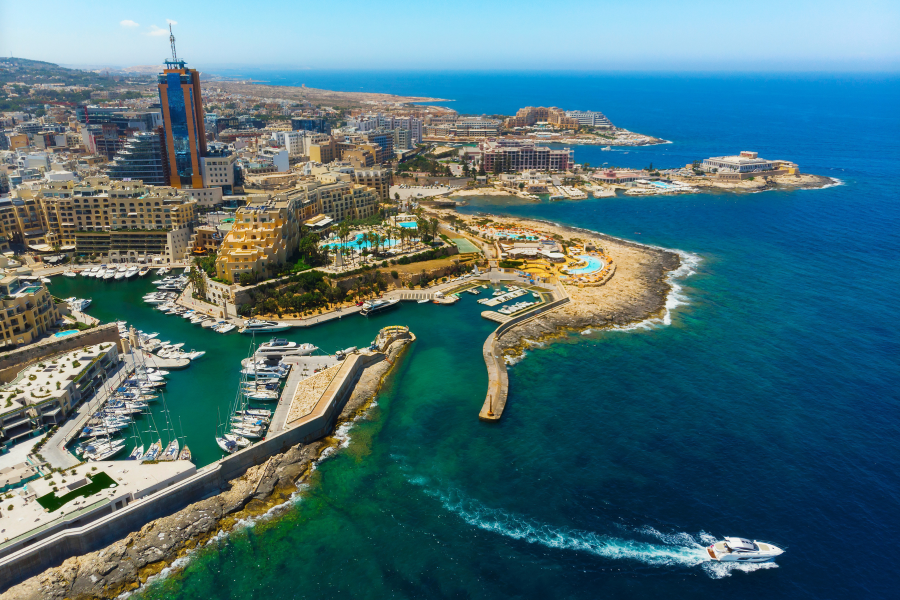
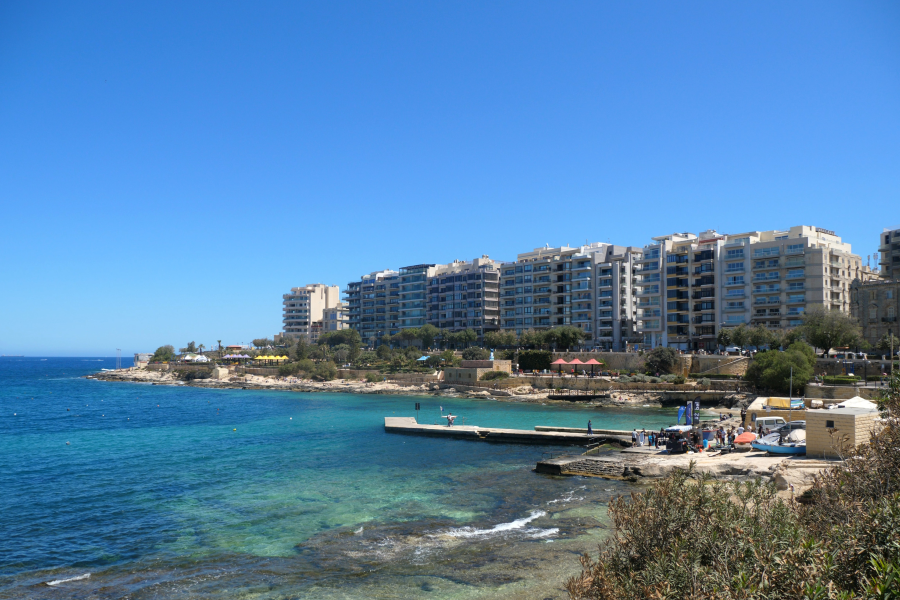
Sliema and St Julian’s: Visibility and Talent Magnet Locations
Sliema and St Julian’s remain among Malta’s most desirable commercial districts for companies where perception, recruitment appeal, and client visibility are central considerations. These locations are strongly associated with international business activity and are often favoured by companies that benefit from positioning themselves within a recognised commercial environment.
They are particularly effective for businesses that rely on:
- International talent attraction.
- Client meetings and partner engagement.
- Strong brand visibility.
- Proximity to hospitality, retail, and residential amenities.
However, operating at a larger scale in these districts introduces several practical constraints. Availability of large continuous office floors is relatively limited, competition for premium office stock remains high, and rental pricing per square metre is typically higher than inland alternatives.
Parking pressure for both employees and visitors also becomes a significant operational factor as headcount increases. As a result, these locations often work best for leadership teams, client-facing divisions, hybrid operational models, or prestige-driven headquarters rather than purely operational hubs.
Gżira, Ta’ Xbiex, and Msida: Transitional Growth Zones
Gżira, Ta’ Xbiex, and Msida provide a middle ground between premium coastal districts and inland business hubs. These central harbour areas are frequently selected by companies that are either scaling operations or attempting to balance accessibility with more controlled occupancy costs.
Their primary advantage is strategic positioning. They offer relatively central access to Sliema, Valletta, and St Julian’s while generally avoiding the highest rental premiums associated with top-tier coastal districts. Office stock across these areas is more varied, ranging from modern commercial developments to converted residential buildings and smaller office blocks. This creates greater flexibility for companies seeking adaptable office solutions, particularly within the mid-to-large size range.
Key advantages typically include:
- Central access across major commercial zones.
- Mixed office stock with flexible sizing options.
- More moderate pricing compared to premium districts.
- Strong suitability for growing teams and transitional expansion.
However, traffic flow, accessibility, and parking availability still require careful evaluation, particularly for businesses operating at larger staff volumes.
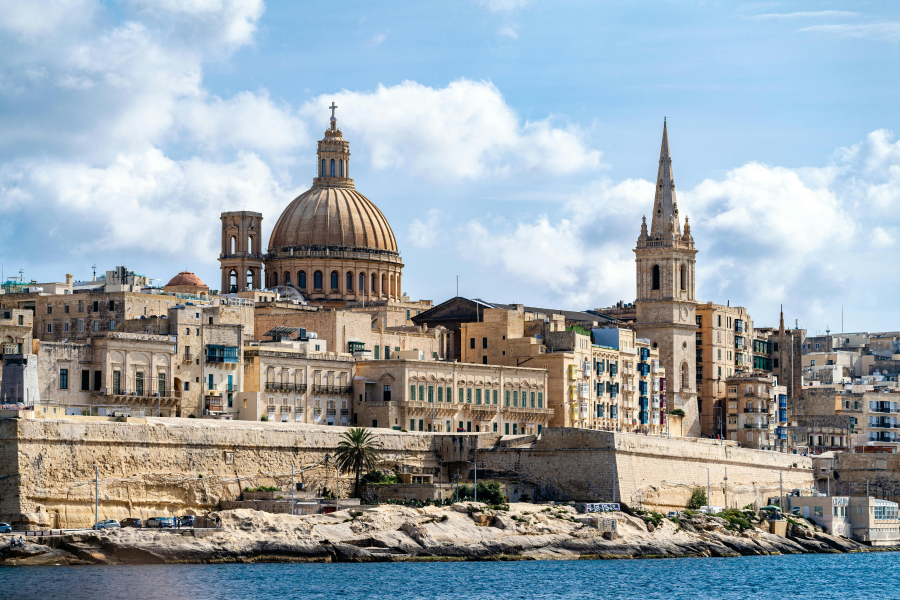
Valletta and Floriana: Institutional and Prestige Environments
Valletta and Floriana operate within a different category of office demand. These locations are less focused on operational scale and more closely tied to institutional presence, heritage positioning, and corporate identity.
They are commonly selected by organisations that benefit from proximity to government, legal, regulatory, or financial institutions, as well as businesses where prestige and architectural character form part of the brand environment.
These locations are particularly suited to:
- Legal and financial institutions.
- Advisory and representative offices.
- Government-facing operations.
- Businesses requiring prestige or heritage branding.
At the same time, large-scale office occupation in these areas presents practical limitations. Many buildings were not originally designed for modern large-floor operational layouts, which can create infrastructure, zoning, and workflow constraints. Parking availability, accessibility, and adaptation costs also tend to be more challenging compared to purpose-built commercial districts. As a result, Valletta and Floriana are generally better suited to selective representative offices or prestige-focused environments rather than full operational headquarters.
How Large Offices Function Internally
At larger scale, office performance depends on how effectively space is structured around departmental interaction and workflow requirements.
Departmental Zoning as an Operational Structure
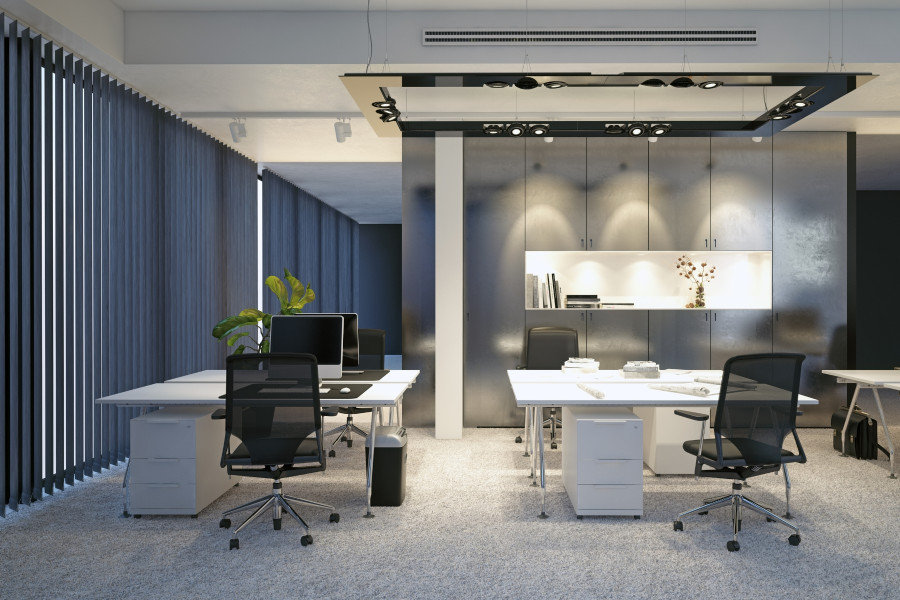
Large offices perform best when departments are structured according to operational function rather than simple desk allocation. At scale, the objective is not only to organise where people sit, but to manage how teams interact, communicate, and move throughout the office environment.
Customer-facing departments benefit from more open and collaborative environments that support constant communication and accessibility. In contrast, back-office functions require quieter working conditions, greater privacy, and more controlled access due to the nature of their responsibilities. Technical, product, and development teams often operate more efficiently in focused environments, while leadership and executive management areas must balance accessibility with confidentiality and decision-making requirements.
When departmental separation is poorly planned, operational friction increases quickly. Noise transfer, interruptions, inefficient movement patterns, and conflicting workflow requirements can reduce productivity even within visually impressive office environments.
Open Plan vs Private Structure
Most large offices operate most effectively with a hybrid layout model rather than relying entirely on either open-plan or fully private office design. Open-plan environments are often well-suited to collaborative and high-volume operational teams; however, private offices remain essential for confidential functions. At larger scale, successful office layouts usually combine multiple working environments within the same space.
Dedicated meeting rooms help prevent discussions and calls from disrupting surrounding teams, and thoughtful acoustic planning becomes increasingly important in managing noise transfer between departments. Rather than creating a uniform office environment, the objective is to establish functional separation that allows different teams and working styles to operate efficiently alongside one another.
Meeting Capacity Becomes a Structural Constraint
As organisations grow, meeting infrastructure often becomes one of the most overlooked operational bottlenecks within the office environment. In large offices, meeting rooms become essential operational infrastructure, and a well-functioning office typically requires multiple meeting environments operating simultaneously.
Larger boardrooms are often necessary for executive discussions, client presentations, and external meetings, while smaller meeting rooms support day-to-day team collaboration and departmental coordination. Dedicated interview rooms help separate recruitment activity from operational areas, while private call rooms have become increasingly important for hybrid communication and remote conferencing.
Infrastructure as a Scaling Constraint
Infrastructure determines operational stability and daily performance in large office environments. Many operational problems only become visible after a company moves into the space and systems are placed under continuous pressure from larger teams.
IT and Connectivity Requirements
Large offices depend on a stable and uninterrupted digital infrastructure across the entire organisation. For many businesses, particularly those operating in technology, finance, iGaming, or cloud-based environments, infrastructure limitations can quickly affect productivity and operational continuity.
Key points to consider typically include:
- High-capacity business internet connectivity.
- Backup internet systems to reduce operational risk.
- Structured cabling throughout the office.
- Dedicated server rooms or IT infrastructure space.
- Secure internal network access.
- Stable coverage for cloud-based systems and communication platforms.
Building Systems and Operational Logistics
Building systems operational layers directly affect efficiency; electrical systems, air conditioning, ventilation, and overall building performance must be capable of supporting multiple departments and occupied zones operating simultaneously throughout the day.
Critical considerations typically include:
- Electrical capacity sufficient to support full operational load across multiple departments and zones.
- Air conditioning and ventilation performance, ensuring consistent comfort and airflow throughout the building.
- Backup power systems to maintain continuity during outages or disruptions.
- Lift capacity and vertical circulation during peak commuting periods.
- Reception flow, access control systems, and overall security infrastructure.
- Delivery access, loading logistics, and service entry points.
- Cleaning, waste management, and ongoing facilities operations.
- Emergency access routes and compliance with accessibility requirements.
- Responsive building management and maintenance systems to support day-to-day operations.
Parking and Employee Movement as a Scaling Factor
Parking availability can directly influence recruitment, retention, punctuality, and overall employee satisfaction, particularly in Malta, where commuting patterns are heavily distributed across the island. As businesses grow, operational pressure around access and movement typically increases in several areas, including:
- Staff commuting from multiple regions.
- Visitor and executive parking allocation.
- Availability and cost of additional parking spaces.
- Reliance on public transport or alternative commuting options.
- Daily congestion around office access points.
Where dedicated parking is limited, alternative transport infrastructure such as bus routes, ferry access, and walkability becomes an increasingly important part of workforce planning rather than a secondary lifestyle consideration.
Lease Structure for Large Office Decisions
Large office leases carry significantly higher financial and operational exposure than smaller office agreements due to the scale of relocation, fit-out investment, and infrastructure requirements involved. At this scale, flexibility within the lease is often just as important as rental pricing.
Companies need to evaluate whether the lease duration aligns with projected growth plans, whether renewal structures provide long-term stability, and whether break clauses offer sufficient exit flexibility if operational requirements change unexpectedly.
Expansion potential within the building also becomes important for growing businesses, particularly where future departmental growth may require additional space over time. Similarly, fit-out permissions and potential landlord contributions should be clearly understood before signing, especially in offices requiring significant internal configuration or infrastructure investment.
Office Configuration Models at Scale
Large office occupancy in Malta generally falls into three primary configuration models, each offering different levels of operational control, flexibility, and management responsibility.
- Serviced offices: Often suitable for transitional growth periods, project-based occupancy, or rapidly scaling businesses requiring short-term flexibility. However, they typically provide limited control over layout, branding, and infrastructure customisation.
- Full-floor offices: Usually offer the strongest balance between operational control, departmental structure, branding, and scalability. These environments are particularly effective for businesses with established internal systems and long-term occupancy plans.
- Standalone office buildings: Provide maximum independence over access, branding, security, and internal organisation. However, they also involve greater management responsibility, higher fit-out investment, and increased operational oversight.
Each model reflects a different operational strategy, and the most suitable option depends on how much control, flexibility, and long-term scalability the business requires.
Common Scaling Mistakes in Large Office Selection
Most problems in large office occupancy do not come from a lack of available space, but from planning assumptions that fail once the office becomes fully operational. At larger scale, small oversights can create long-term issues.
Some of the most common mistakes include:
- Selecting offices based primarily on rental price rather than operational suitability.
- Underestimating how quickly staffing and departmental requirements may grow.
- Ignoring parking limitations and daily commuting friction.
- Overlooking infrastructure capacity and IT requirements.
- Underestimating fit-out costs in shell or semi-finished properties.
- Failing to evaluate how departments will interact within the space.
- Choosing layouts that cannot adapt to future operational changes.
- Focusing on aesthetics while neglecting building-level functionality.
Large Office Search Checklist for Companies in Malta
Before committing to a large office, companies should evaluate how the space aligns with both current operational requirements and future business growth. A structured assessment should include;
- Current and projected headcount over the next 12–36 months
- Departmental structure and private office requirements
- Meeting room, boardroom, and collaboration space needs
- Parking allocation and employee commuting feasibility
- Infrastructure capacity and IT readiness
- Lease flexibility, renewal options, and expansion potential
- Fit-out budget, configuration requirements, and implementation timeline
- Operational suitability of building systems and logistics
- Client-facing presentation and brand positioning requirements
- Long-term adaptability of the office layout
Selecting a large office is ultimately a strategic operational decision that extends beyond space availability and rental pricing. Factors such as infrastructure readiness, departmental structure, lease flexibility, and long-term scalability all play a defining role in determining the right fit for a growing organisation. For companies evaluating large office requirements in Malta, WorkSpaces provides access to commercially suitable office options aligned with operational needs and growth planning.
To find your next office space tailored to your commercial requirements in Malta, contact WorkSpaces on +356 2010 8077, visit the Portomaso Marina office or Tigné Point Pjazza office, or explore available properties at www.workspaces.mt.