SHARE WITH A FRIEND
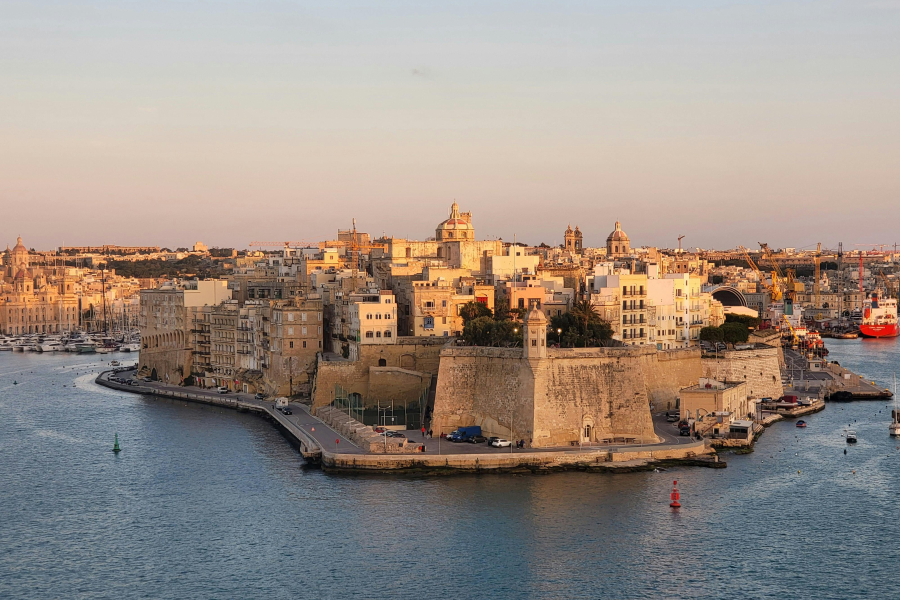
Malta has become an increasingly strategic location for business expansion, particularly within finance, iGaming, aviation, maritime services, and professional services. As companies reassess operational costs across Europe, commercial rent has emerged as a defining factor in relocation and investment decisions. Within this context, Malta’s positioning against key EU markets highlights how pricing structures, location dynamics, and office quality combine to deliver a distinct value proposition without compromising connectivity or regulatory stability.
Commercial Property Landscape in Malta and the European Union
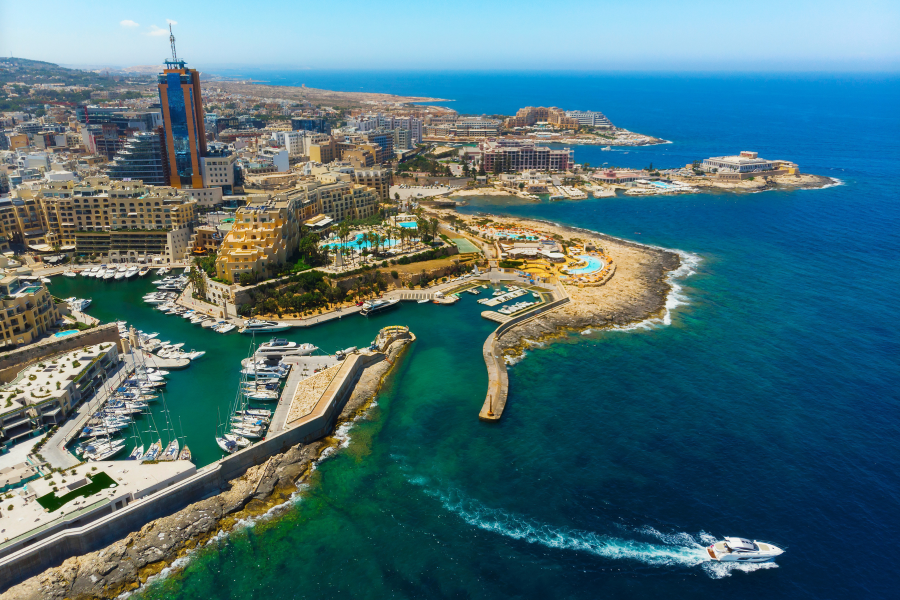
Malta’s commercial property market is defined by its compact geography, high demand zones, and sector-driven clustering. Unlike larger EU economies, where office supply is distributed across multiple major cities, Malta concentrates its commercial activity in specific hubs such as Valletta, Sliema, St Julian’s, and Birkirkara.
Across the European Union, commercial property markets are significantly more fragmented. Cities like Paris, Berlin, Amsterdam, Milan, and Madrid operate as independent ecosystems with varying rental dynamics influenced by national economies, taxation frameworks, and corporate density.
The key differentiator lies in scale and accessibility. Malta enables direct access between commercial hubs within a tightly concentrated business environment, while larger EU countries provide broader market segmentation and deeper corporate infrastructure.
Commercial Rent Levels in Malta Compared to EU Averages
Malta’s commercial rent levels are generally considered mid to upper range within the EU context when adjusted for space quality and location demand. Prime office space in central business districts such as Sliema and St Julian’s can rival secondary European cities in pricing, while still remaining more competitive than major financial hubs. To understand this positioning, it is important to examine how Malta compares across different EU markets:
In Malta, prime office rent is typically influenced by demand from international firms in gaming, fintech, maritime, and advisory services. Space is limited, which creates upward pressure on rental values in high-demand zones.
In contrast, cities such as Berlin or Lisbon offer more abundant office supply, resulting in more moderate rental pricing, particularly outside central districts. High-tier EU cities such as Paris or Amsterdam often exceed Malta significantly in prime office rent due to global corporate concentration and institutional presence. Malta occupies a competitively balanced position within the European rental spectrum, offering premium island jurisdiction benefits without reaching the highest European rental thresholds.
Key Cost Drivers Behind Commercial Rent in Malta
Malta’s commercial rent structure is shaped by a combination of economic, geographic, and regulatory factors. Limited land availability remains the primary structural constraint, placing sustained pressure on commercial supply within established business districts.
Foreign business demand also plays a critical role. International companies relocating to Malta for tax efficiency, licensing frameworks, and EU access contribute to sustained demand for high quality office space. Tourism driven urban zones such as Sliema and St. Julian’s further impact pricing. These areas combine commercial activity with hospitality and residential demand, increasing competition for prime real estate.
Comparison of Malta with Key EU Commercial Markets
Malta’s positioning becomes clearer when compared directly with major EU commercial property markets. In Germany, cities such as Frankfurt and Munich offer large-scale financial districts with extensive Grade A office supply. While rental prices can be high in central zones, the overall market benefits from volume and long-term corporate tenancy structures.
In France, Paris remains one of the most expensive commercial rent markets in Europe, driven by global corporate headquarters and institutional demand. Rental values are significantly higher than Malta in prime districts. The Netherlands, particularly Amsterdam, presents a highly competitive international business environment with strong demand for flexible office space, often resulting in higher per square metre pricing in central zones compared to Malta.
Italy presents a mixed landscape, with Milan acting as a high-value financial hub while other regions remain significantly lower in commercial rental costs. Within this spectrum, this places Malta within a niche premium segment offering EU access, regulatory stability, and English-speaking business infrastructure, without reaching the highest cost tiers of Western Europe.
Office Space Quality and Value in Malta Versus EU Cities
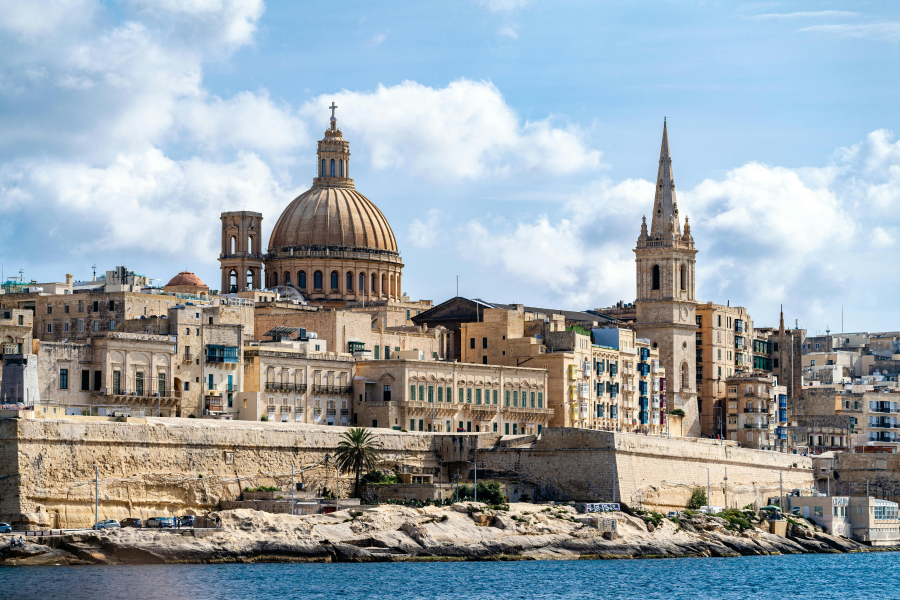
Beyond price alone, commercial rent must be evaluated alongside office quality, flexibility, and the surrounding business environment. Malta’s office market has evolved significantly over the past decade, combining high-specification modern developments with a well-established base of converted historic buildings and character properties. This duality allows businesses to choose between contemporary corporate environments in areas such as Sliema and St Julian’s, and more distinctive office settings within heritage buildings, particularly in Valletta.
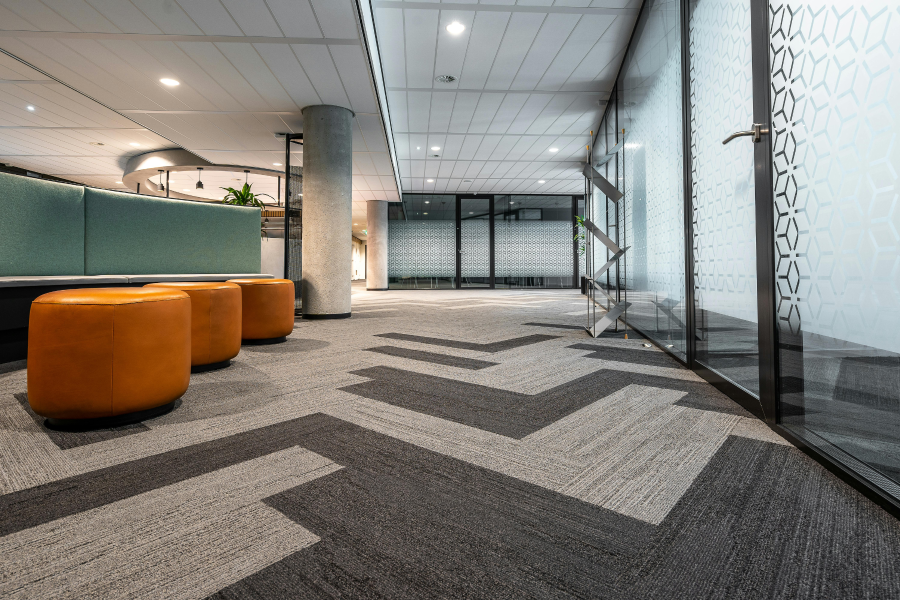
Modern developments across Malta offer high-quality interiors, integrated facilities, and close proximity to lifestyle and commercial amenities, aligning with international occupier expectations. At the same time, restored townhouses and palazzos provide a level of architectural character that is increasingly valued by boutique firms and advisory-led businesses.
In larger EU cities, office stock extends across a broader physical scale, including expansive corporate campuses, specialised business parks, and highly segmented commercial districts. This reflects the size and complexity of those markets rather than a fundamental difference in quality.
Malta’s distinction lies in the immediacy of access across its commercial landscape. Commercial zones remain closely connected, with short commuting distances and minimal fragmentation between business districts. By comparison, major European cities often involve longer commute times and more complex transport dependencies, particularly where business activity is distributed across multiple districts.
Taxation, Regulation and Business Environment Impact on Rent
Commercial rent cannot be separated from the broader regulatory and taxation environment. Malta’s appeal is closely tied to its EU membership, combined with a corporate framework designed to support international business activity.
Companies in Malta are subject to a 35% corporate tax rate. However, the structure operates on a full imputation system combined with shareholder refund mechanisms, which can reduce the effective tax rate to approximately 5% on distributed trading profits.
This is achieved through a refund of up to 6/7ths of the tax paid, typically available to non-resident shareholders, alongside additional variations depending on the nature of income.
- Trading income: +/- 5% effective tax
- Passive income (e.g. royalties): +/- 10% effective tax
- Certain foreign income structures: +/- 10–11.7% effective range
Importantly, this is not a preferential or temporary incentive scheme, but a long-standing, EU-compliant system embedded within Malta’s corporate tax framework.
For both local and international firms, the result is not simply lower taxation, but improved capital efficiency and retained earnings. This structure plays a decisive role in corporate location strategy, particularly for sectors such as finance, iGaming, aviation, and professional services, where margin optimisation and cross-border structuring are central. The concentration of these industries in Malta’s commercial hubs is therefore closely linked to this underlying fiscal structure.
By comparison, larger EU economies such as France, Germany, and Italy operate with effective corporate tax rates typically ranging between 25% - 30%+, depending on regional and municipal layers. Even jurisdictions often considered competitive, such as Ireland or Cyprus, generally apply flat corporate tax rates of around 12.5%, without the same level of reduction available on distributed profits.
While certain Eastern and Southern European markets may offer lower headline rental costs, they do not consistently provide the same combination of tax efficiency, regulatory clarity, and internationally recognised corporate frameworks.
Commercial pricing in Malta reflects a broader jurisdictional framework rather than space alone, where commercial rent reflects more than physical office space. It is closely linked to jurisdictional positioning, tax optimisation potential, and access to a business environment designed for cross-border operations.
Commercial Rent in Malta Through a Strategic Lens
Commercial rent in Malta is best understood not as a standalone cost, but as a component of a broader operational and investment framework. It enables proximity between commercial hubs, residential zones, and lifestyle infrastructure, reducing operational friction and supporting day-to-day efficiency.
For investors, it reflects a market where demand is underpinned not only by space constraints, but by sustained international business activity driven by taxation, regulatory clarity, and EU access. The consistency of Malta’s commercial ecosystem supports predictable operating conditions for both occupiers and investors.
Within this context, commercial real estate in Malta becomes a leveraged operational asset rather than a fixed overhead, where cost, location, and jurisdictional advantage align to support long-term operational and investment outcomes.
For businesses seeking office space in Malta that aligns with specific business requirements and growth trajectories, WorkSpaces offers tailored access to a curated selection of commercial properties across Valletta, Sliema, and St Julian’s. With a focus on precision, market insight, and efficient execution, each requirement is matched to the most suitable environment. Contact WorkSpaces on +356 2010 8077, visit www.workspaces.mt, or visit the Portomaso Marina office or the Tigné Point Pjazza office to explore available opportunities.